Services

From question to production you own.

One ladder, four stages. Each is fixed in scope, ends in something you keep, and earns the next. You can stop after any stage and walk away with the deliverables. That's the point.

01Sprint

ML Feasibility Sprint

2 weeks · fixed scope · från 95 000 kr

Two weeks, one question: is machine learning worth it here? We audit the data you hold, the hardware you run, and the regulatory boundary you operate in, then tell you honestly what ML can and can't do for the use case, and what it would return.

You receive

  • A feasibility report grounded in your actual data, not a generic assessment.
  • An ROI estimate with the assumptions written down, so you can challenge them.
  • A prioritised roadmap, including a sovereignty assessment of your current stack.

How it works

  • Fixed price, published up front: from 95 000 kr, agreed in writing before we start.
  • Your data stays inside your perimeter for the entire sprint.
  • If the honest answer is "don't build this", the report says so, and that's a good outcome too.
02Pilot

Pilot

4–8 weeks · fixed quote after the Sprint

One use case from the roadmap, taken to a working prototype on your data and your infrastructure. Before we start, we agree the success metric in writing (accuracy, latency, cost, whatever the business actually needs), and the pilot is evaluated against it, in the open.

You receive

  • A working prototype your team can run, not a slide deck about one.
  • An evaluation harness and the measured result against the agreed metric.
  • A production plan with real numbers: hardware, effort, and operating cost.

How it works

  • Fixed quote based on the Sprint findings. No open-ended day rates.
  • Something demoable every two weeks.
  • Open-weight models by default, so the prototype is already portable.
03Build

Production build

Scoped per project

The pilot becomes a system. We build the pipelines, harden the serving layer, and put the models into production where your data already lives (on-prem, private cloud, or at the edge), with monitoring, rollback, and reproducibility from day one.

You receive

  • A running system on infrastructure you control, integrated with your stack.
  • Full source code, documentation, and reproducible training pipelines.
  • GDPR and EU AI Act evidence produced as we ship, not months afterwards.

How it works

  • Fixed-scope milestones with demos every two weeks. Never a black box.
  • Portable by construction: standard interfaces, no provider you can't replace.
  • OT-safe delivery for factory environments; procurement-ready for public sector.
04Operate

ML Ops & improvement

Monthly retainer

Models drift, data changes, regulation moves. We monitor, retrain, and improve the system, while deliberately training your team to take it over. The retainer is designed to shrink: success is your engineers not needing us on the phone.

You receive

  • Drift, cost, and latency monitoring with agreed response times.
  • Scheduled retraining and evaluation, with every change documented.
  • An operations runbook, a compliance pack, and hands-on team enablement.

How it works

  • Monthly, cancellable: the relationship is a choice, not a dependency.
  • Every intervention is documented so your team learns from it.
  • Scope reviewed quarterly, and reduced as your team takes over.
Inside every stage

Three disciplines, one principle:
your systems stay yours.

Whatever the stage, the same three disciplines do the work, and the same principle applies: everything runs on infrastructure you control.

01

MLOps & Data Engineering

Reproducible pipelines, feature stores, training-to-serving continuity, and monitoring you can trust. We make models observable, versioned, and boring to operate, the way production should be.

PipelinesFeature storesCI/CD for MLDrift & monitoring
02

Edge Implementation

Inference where the data is created: on devices, factory floors, and private networks. We quantize, distill, and optimize models to run fast on constrained hardware, with no round-trip to anyone's cloud.

QuantizationOn-device inferenceLatencyOffline-first
03

AI Compliance

The EU AI Act and GDPR turned into engineering decisions: data lineage, model documentation, risk classification, and audit trails built into the system, so governance is provable, not promised. Assessments run on Quince Audit, the platform we built for our own auditors.

EU AI ActGDPRNIS2Data lineageAuditability
The Sovereignty Ladder

Every stage moves you
up the ladder.

We map every AI system on five rungs of control, from Exposed to Owned. The Sprint tells you which rung you stand on today. The stages above are the climb.

Beyond the ladder

Other ways
to engage.

Not every need starts with a sprint. We also embed specialists in your team, run AI compliance audits on our own platform, and build products on our own edge stack, starting with MQ Flow. Expand each for detail.

A Quince specialist works from inside your team, not a delivery pod at arm's length. They join your standups, read your codebase, and own outcomes next to your own people. Engage one for a two-week spike or a year-long build.

What they do

  • Stand up MLOps: model CI/CD, feature stores, and drift, cost, and latency monitoring.
  • Take models out of notebooks and into production on infrastructure you control.
  • Migrate workloads off providers you cannot afford to depend on, building the exit first.
  • Produce EU AI Act and GDPR evidence as you ship, not months afterwards.
  • Hand over runbooks and train your team to run it without us.

How the engagement works

  • Embedded full-time as dedicated capacity, or a fixed-scope sprint for a defined piece of work.
  • Matched on what they have shipped and how fast they learn your stack, never on a job title alone.
  • Priced by the month or by fixed scope, agreed in writing before we start.
MLOpsEdge MLAI complianceData engineeringLLMs & classical ML

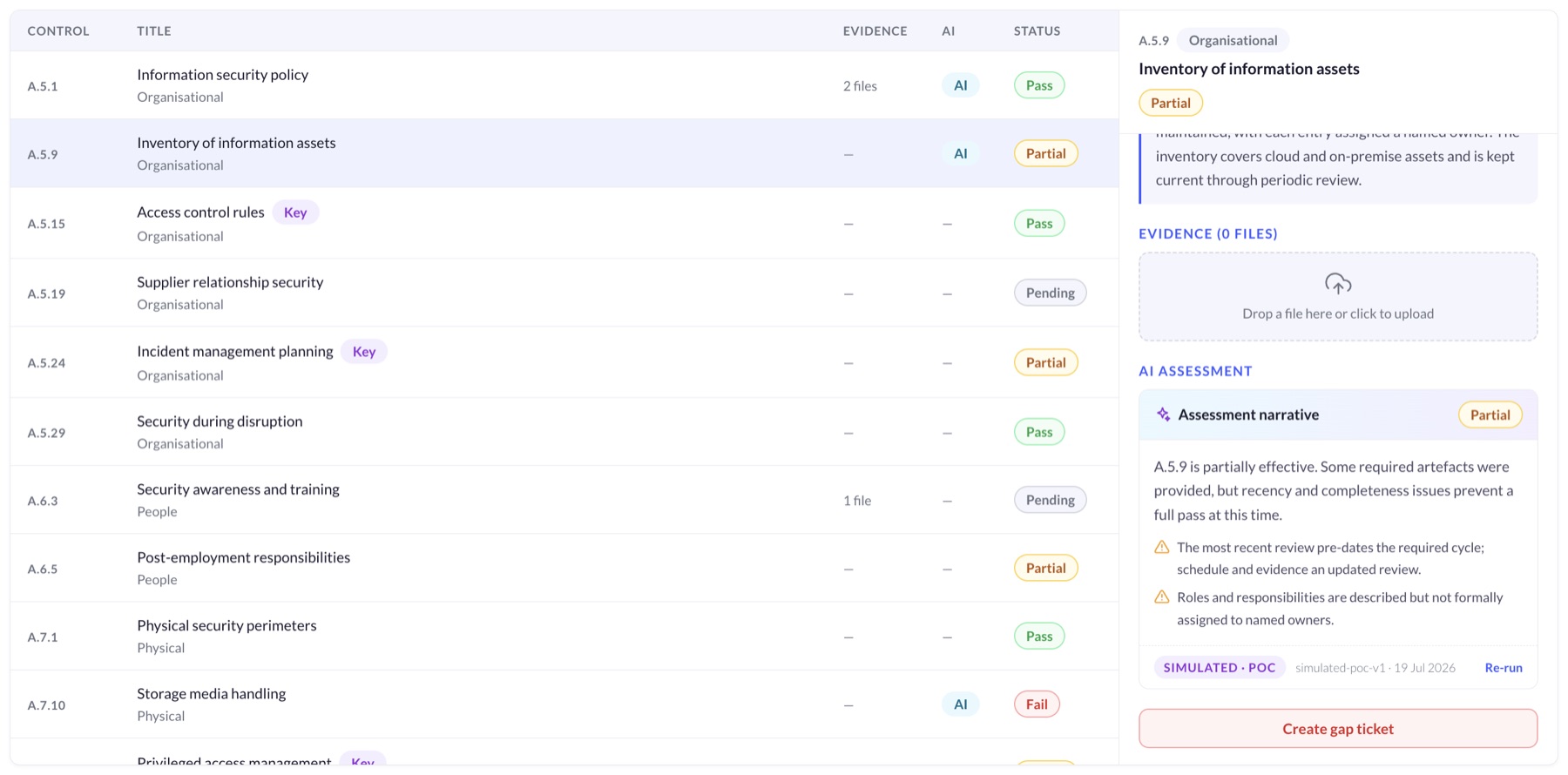
You buy a package of consultant hours. Our assessors bring Quince Audit, the compliance-assessment platform we built and run ourselves, and it absorbs the manual work those hours used to disappear into: reading evidence, drafting the assessment, chasing the missing documents, and keeping every conclusion traceable back to the file it came from. Because the platform is ours, there are no extra licences to buy.

The AI reads the evidence and proposes a verdict with its reasoning. An assessor confirms every one of them. The proposal is a first pass, never the decision, and it is visible to our assessors rather than to the people who uploaded the documents.
What the audit covers

  • A complete inventory of AI in use, sanctioned systems and shadow AI alike.
  • EU AI Act scope classified per system, with the reasoning written down.
  • NIS2 and GDPR readiness assessed against each workload.
  • Model cards, data-flow maps, and audit logging a regulator will accept.
  • A no-blame amnesty that surfaces the AI your staff already rely on.

What you leave with

  • One board-ready report, plus the evidence pack behind every finding.
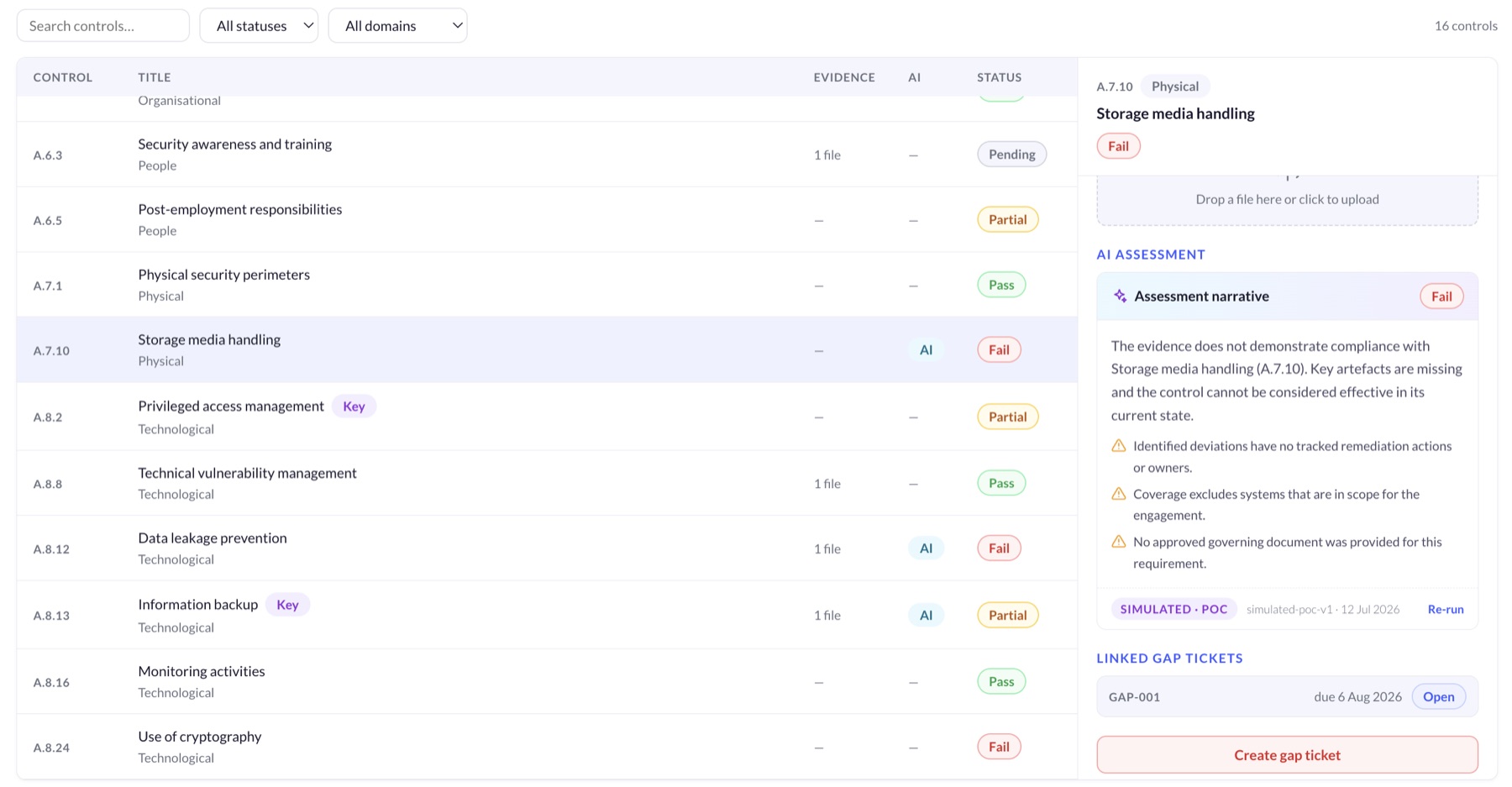
  • Findings ranked by exposure, each raised as a tracked gap ticket with a named owner and a due date.
  • A risk register that traces each entry back to the control and the gap that produced it.
  • A reproducible chain, so when a conclusion is questioned a year later the reasoning is still there.
  • Your next cycle starts from the last one, so it is a diff rather than a restart.
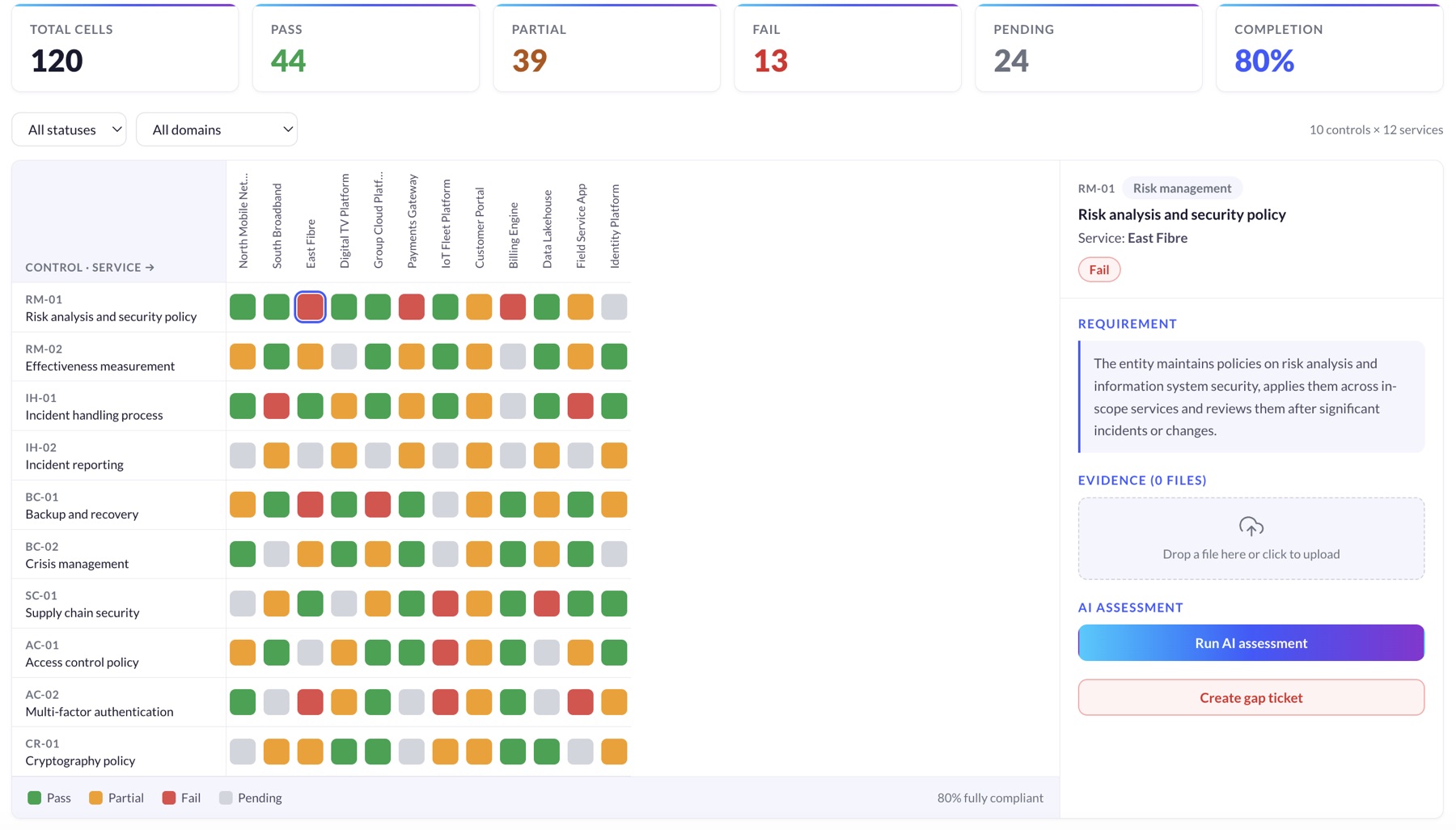
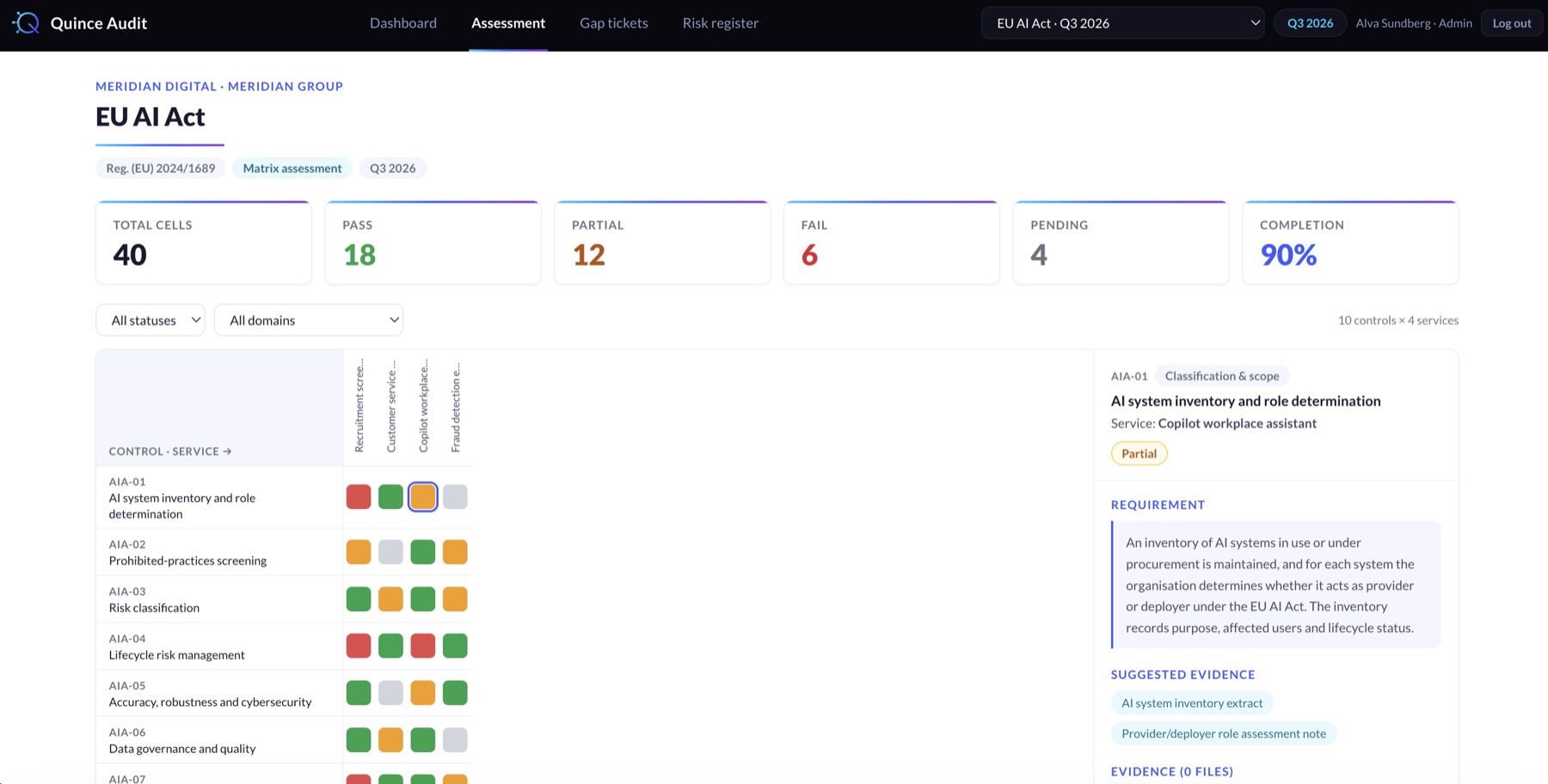
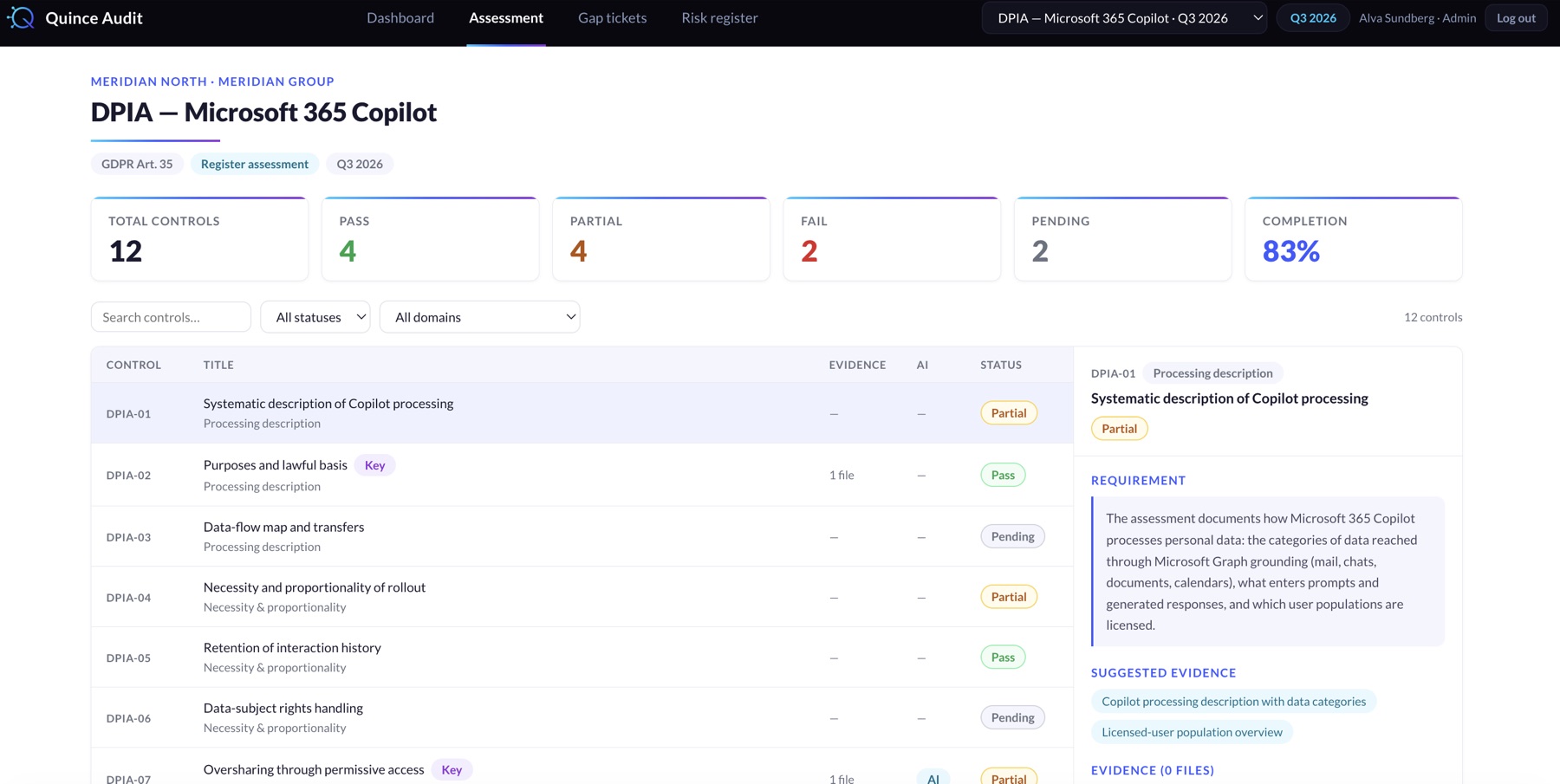
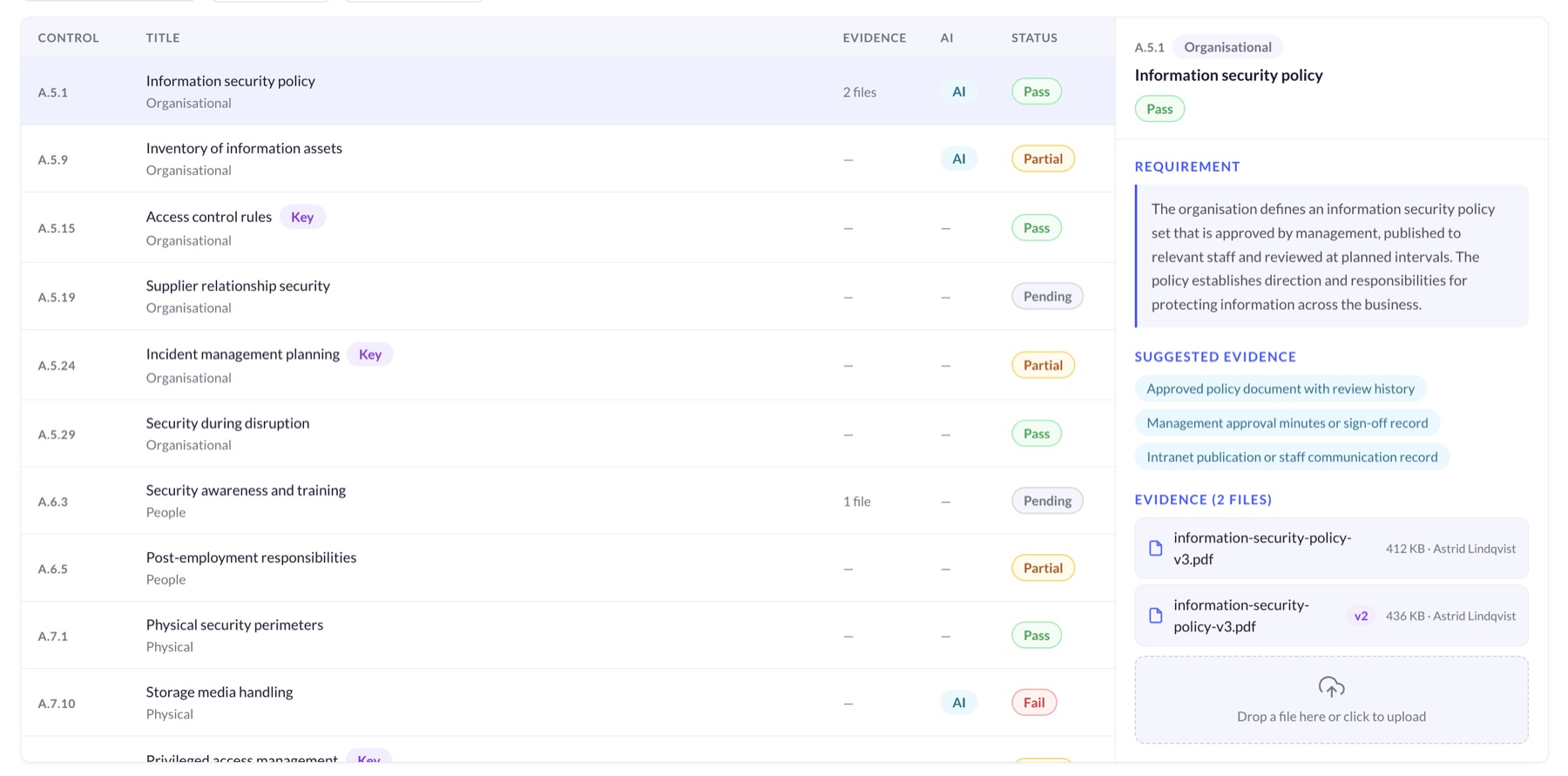
The Quince Audit controls register for ISO 27001, with a detail panel showing the requirement text, suggested evidence and two attached evidence files. An AI assessment in Quince Audit proposing a Partial verdict, with a written narrative and two identified gaps listed beneath it. A failed control in Quince Audit showing the assessment narrative and a linked gap ticket with a due date and open status. The NIS2 compliance matrix in Quince Audit, ten controls assessed across twelve services as a colour-coded grid. The EU AI Act matrix in Quince Audit, controls assessed across four AI systems with completion statistics above. A GDPR Article 35 DPIA assessment in Quince Audit for Microsoft 365 Copilot, showing pass, partial, fail and pending counts across twelve controls.
Quince Audit, shown in our demo environment with sample data. Client assessments are never used for illustration.
NIS2EU AI ActISO 27001:2022GDPR & DPIAISO 42001Custom standards

MQ Flow runs a building's heating, ventilation, and humidity from a physics model of human comfort, then learns what the people in each room actually prefer. Occupants never set a temperature. They tap warmer or cooler, and the system does the rest. We build the AI and the software; our HVAC partner Mifimi brings the domain expertise that makes it real in a plant room.

Baseline
Physics first

A Fanger PMV comfort model (ISO 7730) computes each room's comfort target from temperature, radiant heat, humidity, and air movement. It works from day one, before any learning.

Personalise
Learns each room

Per-room reinforcement learning turns warmer and cooler taps into a personal comfort offset, tuning to the actual people in the room rather than a statistical average.

Optimise
Cheapest levers first

The same comfort can be reached several ways. The optimiser adjusts fresh air and humidity before touching the heat pump, targeting at least 30% lower energy use.
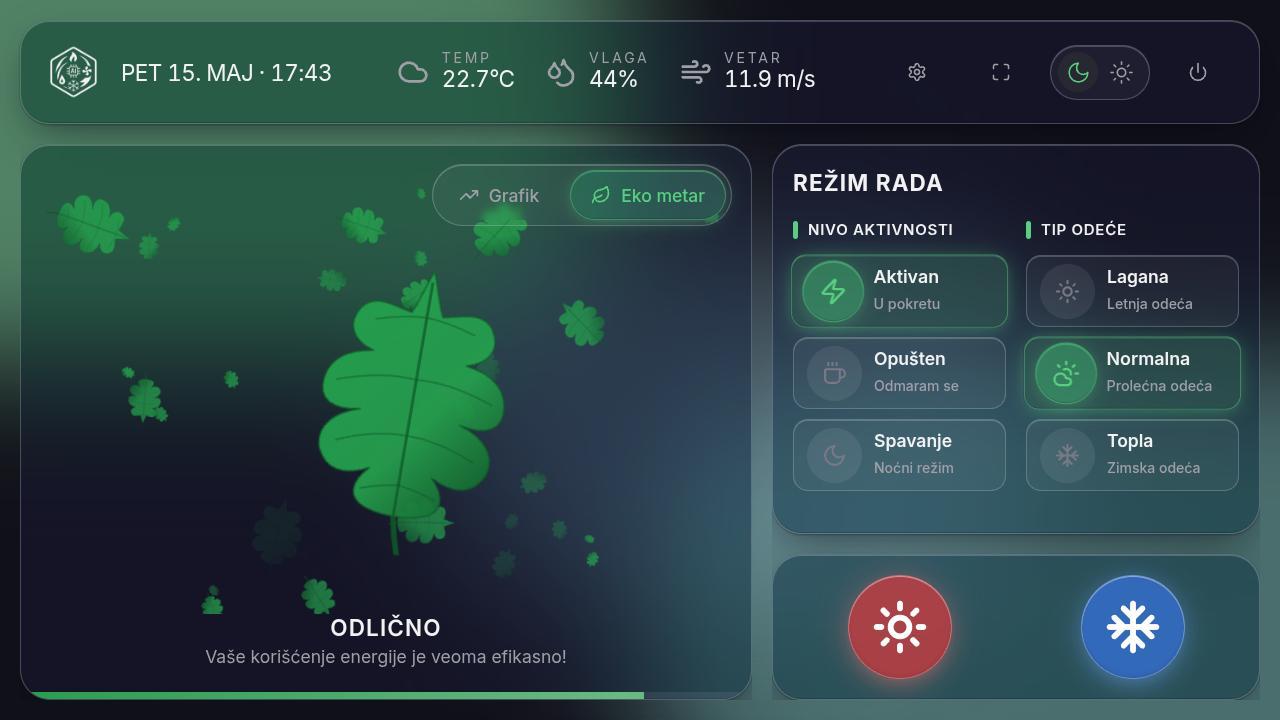
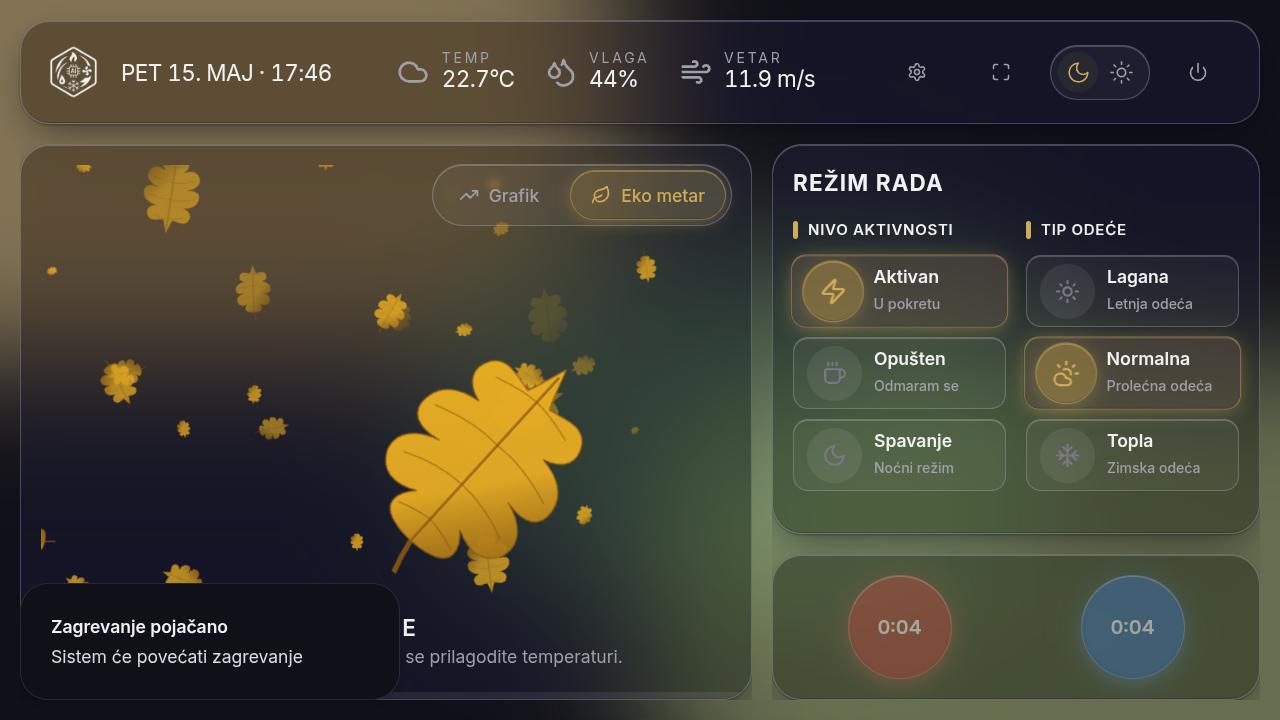
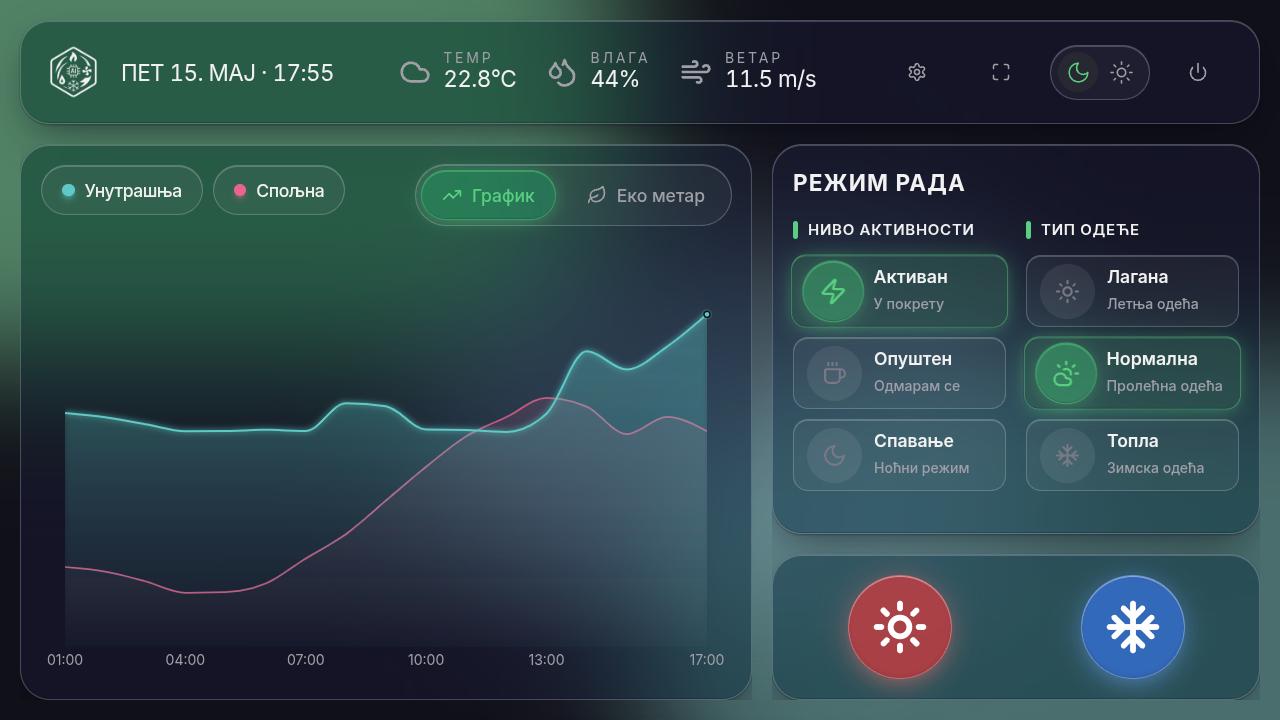
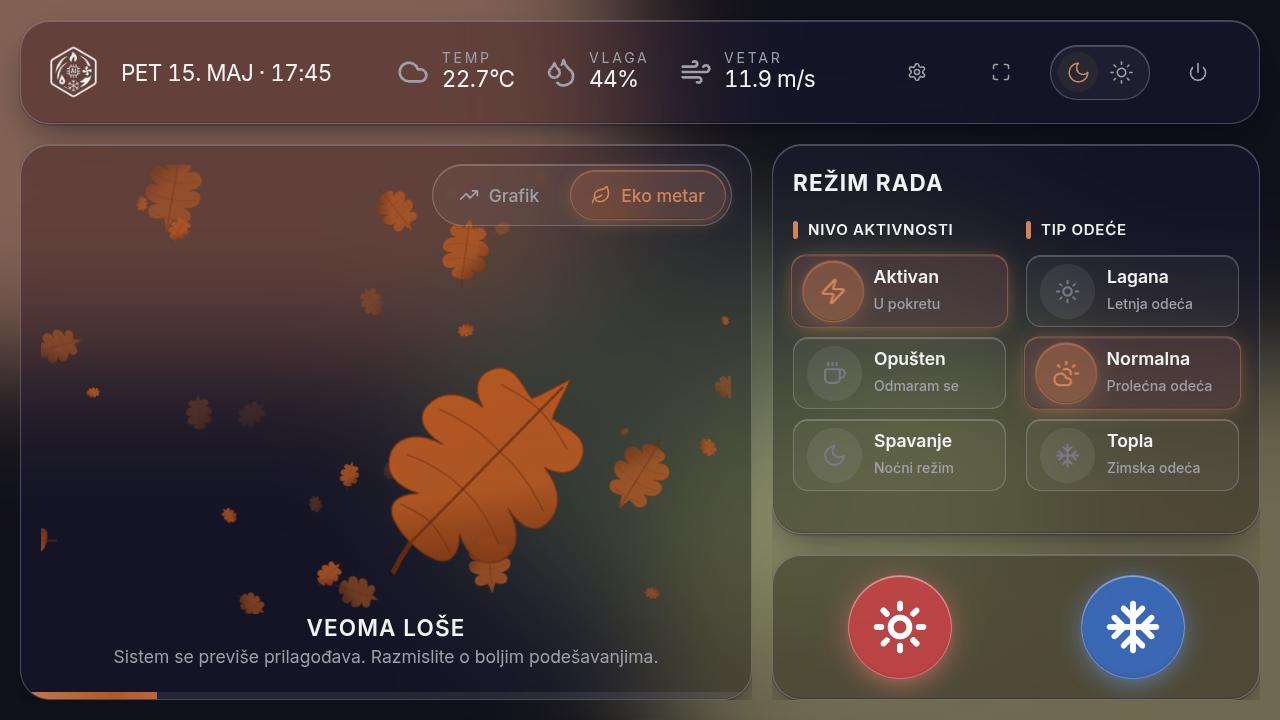
The MQ Flow eco meter in its green state, telling the room its energy use is very efficient, beside activity level and clothing type controls. MQ Flow reacting to occupant feedback: a heating boost notification and cooldown timers on the warmer and cooler buttons. The MQ Flow graph view plotting indoor against outdoor temperature across the day. The MQ Flow eco meter in its orange warning state, telling the room the system is over-adjusting and suggesting better settings.
The interface up close, shown in Serbian for the Belgrade pilot. Occupants see activity and clothing, never a setpoint, and the eco meter coaches the room in both directions.
A minute and a half of MQ Flow running: live conditions, occupant feedback, and the eco meter responding.

What makes it different

  • Comfort is computed, not guessed: PMV weighs radiant heat, humidity, and air movement, not air temperature alone.
  • Occupant taps are the training signal for the reinforcement learning, so the system improves with use.
  • Retrofit-friendly: BACnet integration and one API toward any PLC, built to drop into existing buildings.
  • The control loop runs on hardware in the building: per-room thermostat units on our edge stack, plus a weather station.

Where it stands

  • The first batch of 28 thermostat units is being installed in a faculty building in Belgrade.
  • Data collection and model use are being evaluated on the live building.
  • At least 30% energy reduction is the project target. We publish measured figures when the evaluation closes, not before.
Fanger PMVReinforcement learningEnergy optimisationBACnetEdgeRetrofit
Start with the Sprint

Two weeks to an honest answer.

The ML Feasibility Sprint is the lowest-risk way to find out whether machine learning is worth it for your use case: fixed scope, published price, and a report you keep either way.