We built a product called ReQloth. We do not sell it today. A consultancy that only publishes what worked is telling you half of what it knows, and the half it leaves out is usually the useful half.
What it was
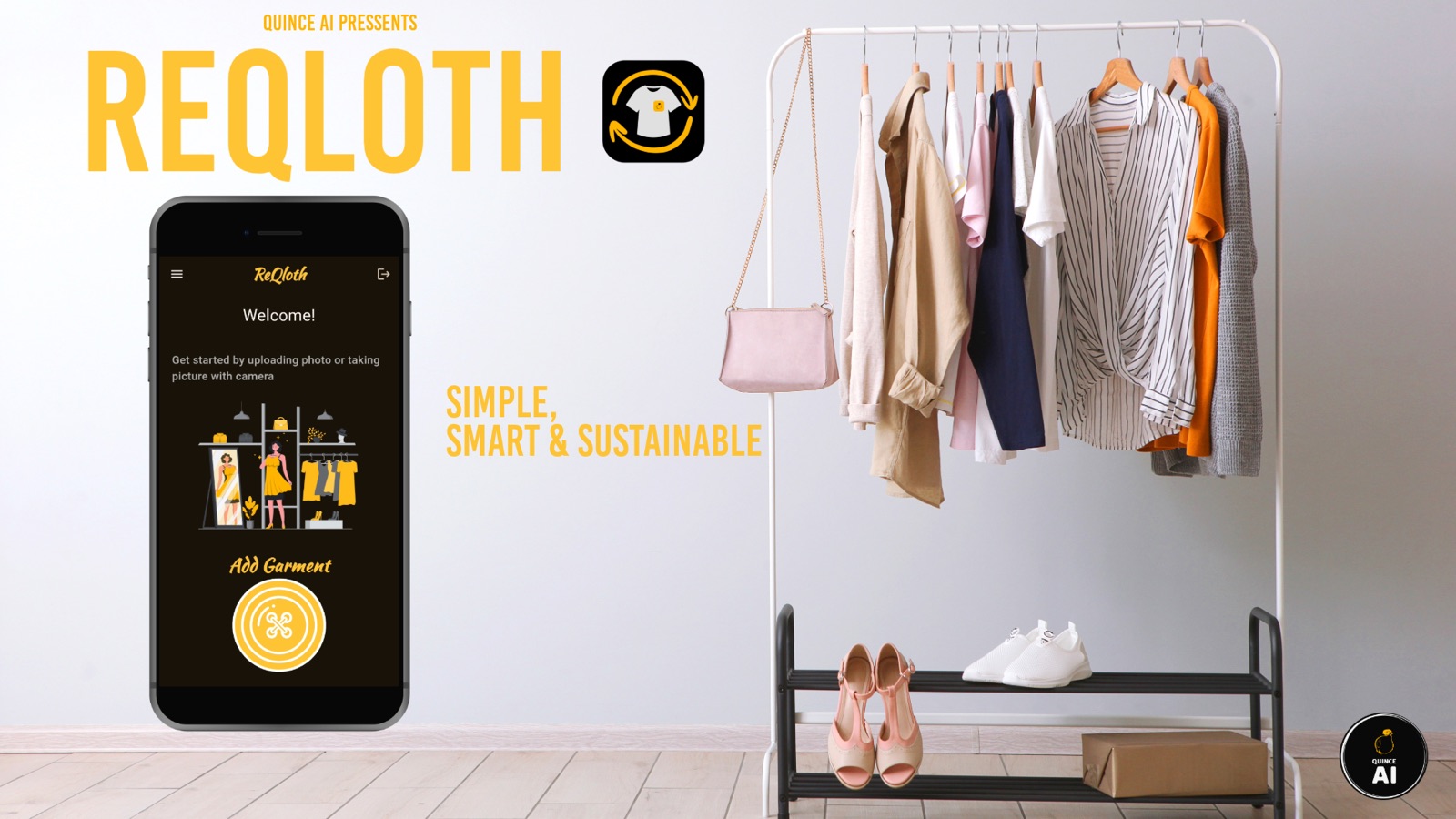
Our textile sorting work with Wargön Innovation, in our note on sorting used textiles, happens on an industrial line with instruments. A phone already holds a very good camera, so why sort at the end of the chain instead of the start? ReQloth let a person photograph a garment and get back what it was, its condition, its likely material and an estimated value, then matched it to local second-hand shops and material buyers as a bidding list. Sort at home, not at a facility, and the expensive facility in the middle stops being necessary. The same matching idea later went into Qonverge.
What happened
From January 2025, EU rules required member states to collect textiles separately. We expected volume to strain the collection system and a tool that sorted at the source to be useful exactly then. Volumes rose and sorting stations were overwhelmed. But an overwhelmed system does not get more sophisticated. It gets simpler. Municipalities told citizens to take usable clothes to the nearest second-hand shop and the rest to the recycling centre. Sensible, and the opposite of what ReQloth needed: it removed the friction our product monetised. Second-hand shops, meanwhile, were flooded with supply. Both sides of the marketplace weakened at once.
We built a bridge, and while we were building it the authorities told everybody to use the ford.
What we got wrong
The technology worked and now serves industrial materials classification. The mistake was a market judgement. We treated a regulation as a market, when a rule creates volume, not willingness to pay. We modelled the steady state, not the transition, when the actors we depended on were making emergency decisions. We never asked what municipalities would do when the system buckled, and that one actor decided the outcome. And we validated enthusiasm instead of behaviour.
What it changed
The way we scope work exists in the shape it does because of ReQloth. Every engagement starts small, has a price agreed in writing, and ends in a written recommendation that is allowed to say no. We ask who captures the value and who could remove the problem entirely, alongside whether the model can be built. And we no longer treat a regulatory deadline as evidence of demand.
Textile circularity is still a real, unsolved problem. Our view after ReQloth: the technology is ready, the consumer marketplace is not where the value sits, and the actor to understand first is the municipality. If you are weighing something similar, talk to us before you build.